"Chúng tôi sử dụng cookie để cung cấp cho bạn trải nghiệm duyệt web tốt hơn, phân tích lưu lượng truy cập trang web và cá nhân hóa nội dung. Bằng cách sử dụng trang web này, bạn đồng ý với việc sử dụng cookie của chúng tôi.Chính sách bảo mật

Mastering Non-Woven Fusible Interlining Fabric: A Comprehensive Technical Guide

Feb 27, 2026

Non-woven fusible interlining fabric is an essential, though sometimes overlooked, component in garment construction and textile products. It provides structure, stability, and shape retention, ensuring that finished pieces look sharp, hold up to wear, and meet the designer’s intent.


What is Non-Woven Fusible Interlining Fabric?

Non-woven fusible interlining is a textile product constructed by bonding fibers together without traditional weaving or knitting. Unlike woven or knitted interlinings, non-wovens are made by mechanical, chemical, or thermal bonding of fibers to create a uniform sheet. Fusible interlining includes an adhesive layer that allows it to bond permanently to a garment fabric when heat and pressure are applied.

Key functions:

  • Shape and support: Reinforces collars, cuffs, waistbands, plackets, and facings.
  • Dimensional stability: Reduces stretching, puckering, and distortion.
  • Appearance enhancement: Improves drape, body, and surface finish.

Technical Composition & Structure

Core Fibers

Non-woven interlinings are typically made from synthetic fibers such as polyester, polyamide, polypropylene, or blends with natural fibers like cotton. The fiber choice directly influences:

  • Tensile strength
  • Flexibility
  • Thickness and loft
  • Thermal resistance

Example structures include:

  • Spunbond: Continuous filament fibers bonded thermally.
  • Needle-punched: Fibers mechanically entangled for robust strength.

Fusible Adhesive Systems

The “fusible” property comes from an adhesive layer applied to one or both faces. Adhesives are engineered for specific:

  • Melting points
  • Viscosity
  • Penetration behavior

Common adhesive chemistries include:

  • Polyamide-based glues: Good for fine fabrics.
  • Polyester glues: Better high-temperature resistance.
  • Copolymer adhesives: Tunable adhesion properties.

Performance Characteristics

Understanding performance metrics helps designers and manufacturers match the right interlining to the end use.

Thermal Properties

  • Activation temperature: The specific heat required to melt the adhesive without damaging the garment fabric.
  • Heat stability: How well the interlining retains properties after repeated pressing.

Mechanical Properties

  • Tensile strength: Resistance to pulling forces.
  • Elongation: Ability to stretch without breaking.
  • Shear stability: Resistance to forces that distort shape.

Hand Feel & Drape Impact

Non-wovens can affect the tactile quality of a garment:

  • Soft hand: For lightweight blouses or fine tailoring.
  • Firm body: For structured jackets or suiting.

Balancing rigidity with comfort is a core technical challenge.


Selecting the Right Interlining: Technical Criteria

Selecting an interlining isn’t one-size-fits-all. Consider these parameters:

Fabric Compatibility

  • Fiber type: Polyester interlining works well with polyester garments; natural fibers may require different adhesives.
  • Weave or knit structure: Close-weave fabrics require thinner interlinings to avoid stiffness.

End-Use Requirements

  • Apparel type: Casual wear vs. formal tailoring.
  • Frequency of cleaning: Dry-clean only vs. machine wash.

Weight & Thickness

  • GSM (grams per square meter): Higher GSM = heavier, firmer support.
  • Micron thickness: Influences drape and seam performance.

Shrinkage Behavior

Fabric and interlining with mismatched shrinkage can lead to puckering. Always pre-shrink or test before production.


Application Techniques: Precision Matters

Applying fusible interlining requires control over heat, pressure, and timing.

Equipment

  • Iron/Press: For small-batch tailoring.
  • Fusing press machines: Provide uniform heat and pressure for industrial production.

Process Parameters

Factor Typical Range / Consideration
Temperature 120°C–180°C (depends on adhesive)
Pressure Moderate to firm
Time 10–20 seconds
Moisture/Steam Often necessary for better bonding

Step-by-Step

  • Prepare materials: Ensure both fabric and interlining are clean and flat.
  • Test press: Always trial at a small patch for ideal settings.
  • Align precisely: Avoid misalignment before pressing.
  • Press consistently: Ensure even application across surface.
  • Cooling: Allow proper cooling before further handling.

Common Technical Challenges & Solutions

Insufficient Bonding

Cause: Low temperature or insufficient pressure.
Solution: Increase temperature in small increments and ensure uniform pressure.

Fabric Shine or Gloss (on delicate fabrics)

Cause: Excessive heat or improper adhesive penetration.
Solution: Use a pressing cloth and lower temperature adhesives.

Puckering

Cause: Differential shrinkage or fabric distortions.
Solution: Pre-press fabrics; match interlining shrinkage to garment fabric.

Hard Hand on Lightweight Fabrics

Cause: High GSM interlining on fine material.
Solution: Use lightweight non-woven interlining with softer fiber mixtures.


Advanced Considerations for Manufacturers

Computer-Controlled Fusing Systems

Modern production lines use automated heat-press systems with digital controls to:

  • Reduce variability
  • Ensure consistent adhesion
  • Lower defect rates

Eco-Friendly & Sustainable Options

With greater demand for sustainability, manufacturers are exploring:

  • Bio-based adhesive polymers
  • Recyclable interlining materials
  • Low-energy activation systems

These advancements help reduce environmental impact without compromising technical performance.

Quality Control Metrics

Routine QC should evaluate:

  • Peel strength
  • Hot-wash/dry-clean performance
  • Dimensional stability over repeated care cycles

Non-woven fusible interlining fabric may be “behind the scenes,” but it plays a crucial technical role in garment performance, appearance, and longevity. By understanding material composition, performance metrics, precise application methods, and troubleshooting strategies, designers and manufacturers can elevate product quality and optimize production efficiency.
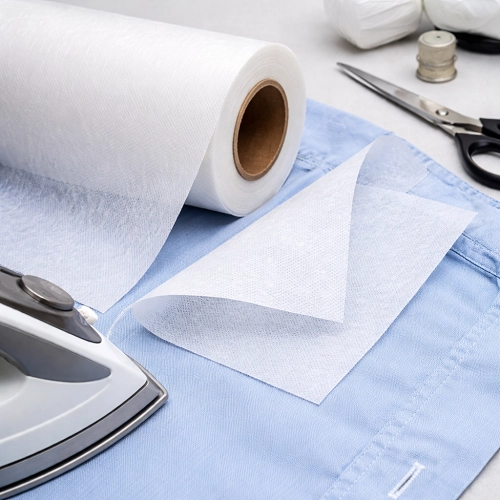

Non-Woven Fusible Interlining Fabric

Liên lạc

Bạn có thắc mắc? Chúng tôi có câu trả lời!

Hãy nói chuyện